
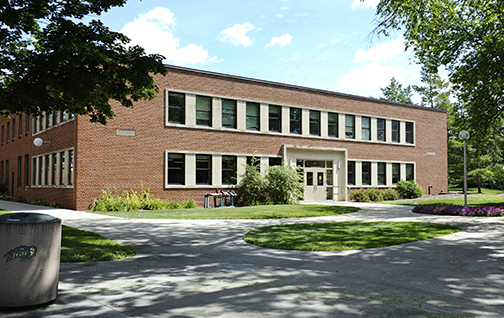
Agricultural and Biosystems Engineering
Agricultural and Biosystems Engineering Major
The Agricultural and Biosystems Engineering (ABEN) program prepares men and women for careers requiring application of physical, biological, and engineering sciences to develop solutions relating to: the design and production of machine systems; the production and handling of biological materials; processing of food, feed, fiber, and fuel; and the preservation of natural resources and environmental quality. A major in Agricultural and Biosystems Engineering can serve a broad range of career interests and can provide excellent career opportunities for men and women from diverse backgrounds.
The program educational objectives of this major are that graduates are expected to have established themselves as practicing engineers who, within a few years of graduation:
- Successfully address emerging engineering challenges in the design or evaluation of machine systems, processing systems, and natural resources and environmental systems affecting the production of food, feed, and other biobased products;
- Effectively use professional communication, critical thinking, and interpersonal skills as team leaders and team members; and
- Responsibly serve the public and their employers by participating in professional development and by maintaining the highest standard of professional ethics.
These objectives support the department mission of developing and extending knowledge through engineering and technology that advances the productivity of agricultural production, the processing and utilization of biological materials, and the management of environmental resources.
Agricultural and biosystems engineering integrates engineering topics, engineering design, and biological sciences in a single program with two concentrations: agricultural engineering and biosystems engineering. While there is considerable overlap between the agricultural engineering (AGEN) and the biosystems engineering (BSEN) concentrations, the BSEN concentration includes a heavier emphasis on fundamental biological and chemical sciences. The AGEN concentration includes a heavier emphasis in the physical sciences. A wide range of electives in related disciplines can be used to compliment the disciplinary course work and to prepare for specific career interests. Although not required by the curriculum, students are encouraged to take advantage of Cooperative Education experiences or the opportunity of paid internships where they gain hands-on experience in engineering.
Agricultural Engineering Option
Career opportunities for graduates in agricultural engineering are many and diverse. Graduates may work for companies and agencies that design, develop, test, and manufacture power and machine systems; handle, store, and process agricultural commodities; design environmental controls and housing systems for plant and animal production; design equipment and systems for processing, manufacturing, distribution and quality protection of food products; design systems for management of air, land and water resources; design and manage crop irrigation systems; and develop electrical and electronic applications for agricultural problems. Graduates with an agricultural engineering concentration may also pursue graduate degrees in engineering, business, or law. By selecting appropriate elective courses, students may emphasize areas such as agricultural systems, environmental systems, biomaterials and processing systems, or an emphasis area designed by the student in consultation with an adviser.
The faculty assist with career planning and job placement of graduates. Students interested in careers involving production, delivery, management, and technical support of systems for food, agricultural, or closely related industries rather than engineering or design should consider the Agricultural Systems Management major offered by the College of Agriculture, Food Systems, and Natural Resources.